Buy leadership-training.eu ?
We are moving the project
leadership-training.eu .
Are you interested in purchasing the domain
leadership-training.eu ?
domain@kv-gmbh.de · 0541-91531010
Buy leadership-training.eu ?
What are different principles of development?
There are several principles of development that influence how individuals grow and change over time. These include the principles of lifelong development, multidimensional development, multidirectional development, plasticity, and contextual influences. Lifelong development emphasizes that development is a continuous process that occurs throughout the lifespan. Multidimensional development recognizes that individuals develop in multiple areas such as physical, cognitive, and socioemotional domains. Multidirectional development acknowledges that development can involve growth and decline in different aspects. Plasticity refers to the capacity for change and flexibility in development, while contextual influences highlight the impact of environmental factors on development. **
Which principles?
The principles referred to in the context of this conversation are likely the fundamental beliefs or guidelines that govern a particular system, organization, or practice. These principles could include values such as honesty, integrity, respect, fairness, and accountability. Adhering to these principles helps ensure ethical behavior, consistency, and effectiveness in decision-making and actions. **
Similar search terms for Principles
Top-Angebote
Products related to Principles:
-
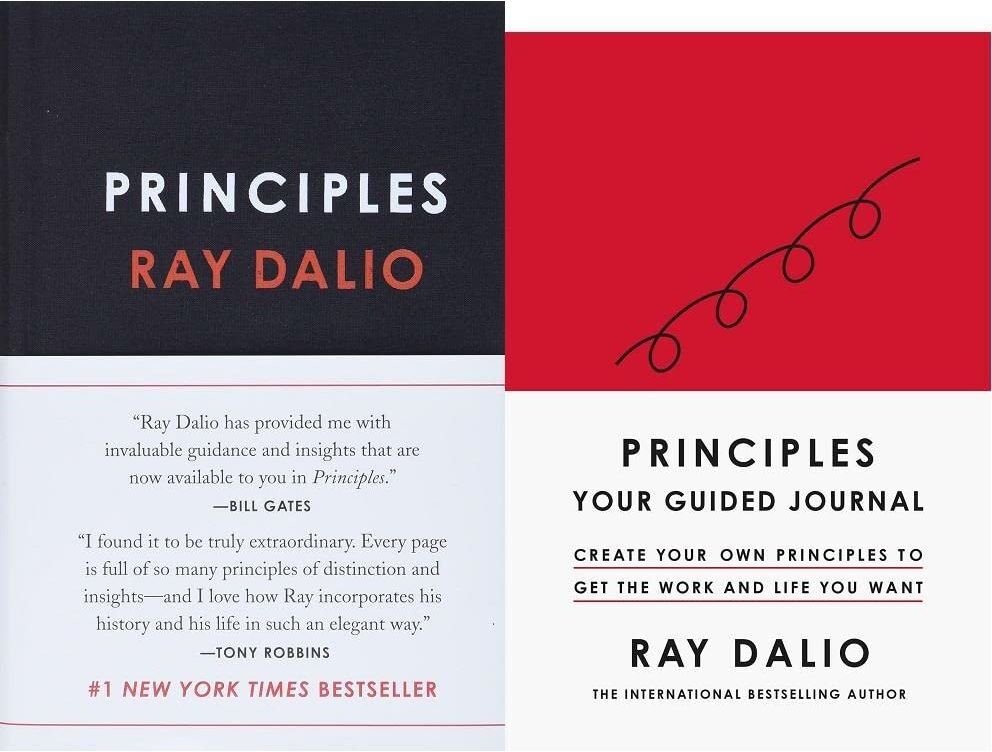
Simon & Schuster Principles and Principles for Dealing with the Changing World Order 2 Books Collection Set by Ray DalioRay Dalio Collection 2 Books Set (Principles Life and Work, Principles for Dealing with the Changing World Order): Principles Life and Work: In Principles, Dalio shares what he’s learned over the course of his remarkable career. He argues that life, management, economics, and investing can all be systemized into rules and understood like machines. The book’s hundreds of practical lessons, which are built around his cornerstones of “radical truth” and “radical transparency,” include Dalio laying out the most effective ways for individuals and organizations to make decisions, approach challenges, and build strong teams. Principles for Dealing with the Changing World Order: A few years ago, Ray Dalio noticed a confluence of political and economic conditions he hadn’t encountered before. They included huge debts and zero or near-zero interest rates that led to massive printing of money in the world’s three major reserve currencies; big political and social conflicts within countries, especially the US, due to the largest wealth, political and values disparities in more than 100 years; and the rising of a world power (China) to challenge the existing world power (US) and the existing world order.30,99 £*Shipping: 2,99 £Secure redirect to the provider
-
Simon & Schuster Principles: Your Guided Journal: Create Your Own Principles to Get the Work and Life You Want by Ray DalioIn his international bestseller Principles, legendary investor Ray Dalio introduced millions of readers around the world to the unconventional approach he developed as the founder and builder of Bridgewater Associates, the largest and most successful hedge fund in the world. Dalio attributes his unique success to his process of recording, refining and acting on a set of well-defined principles, which are effectively decision-rules for getting what you want out of life and work. His goal in publishing the book was to show readers the value of principle-based thinking so that they could develop their own principles, aligned with their own values, for getting whatever they wanted out of life. With this new journal, Dalio takes his goal one step further to help readers reflect on and record their own principles. He does that by providing a series of guided exercises and questions for reflecting on what you’re like, what you value, and what principles will best help you achieve your goals. These exercises draw from key concepts in the original Principles book, including: 1. How to identify your strengths, weaknesses, motivations and preferences 2. How to use the 'five-step process' to achieve your goals 3. How to become both 'assertive and open-minded at the same time' 4. How to maximise your learning from your mistakes (which are inevitable) All of these exercises can optionally be enhanced using the free Principles in Action iOS and Android app, which provides an even more interactive, multimedia experience, and they are followed by a number of blank journal pages containing thought-provoking and unconventional prompts from Principles aimed at helping you formulate your own principles. The experience concludes with a structured reflection on where you and your loved ones are along life’s journey, leaving you with a highly personalised, practical playbook for achieving success in the years ahead.12,99 £*Shipping: 2,99 £Secure redirect to the provider
-
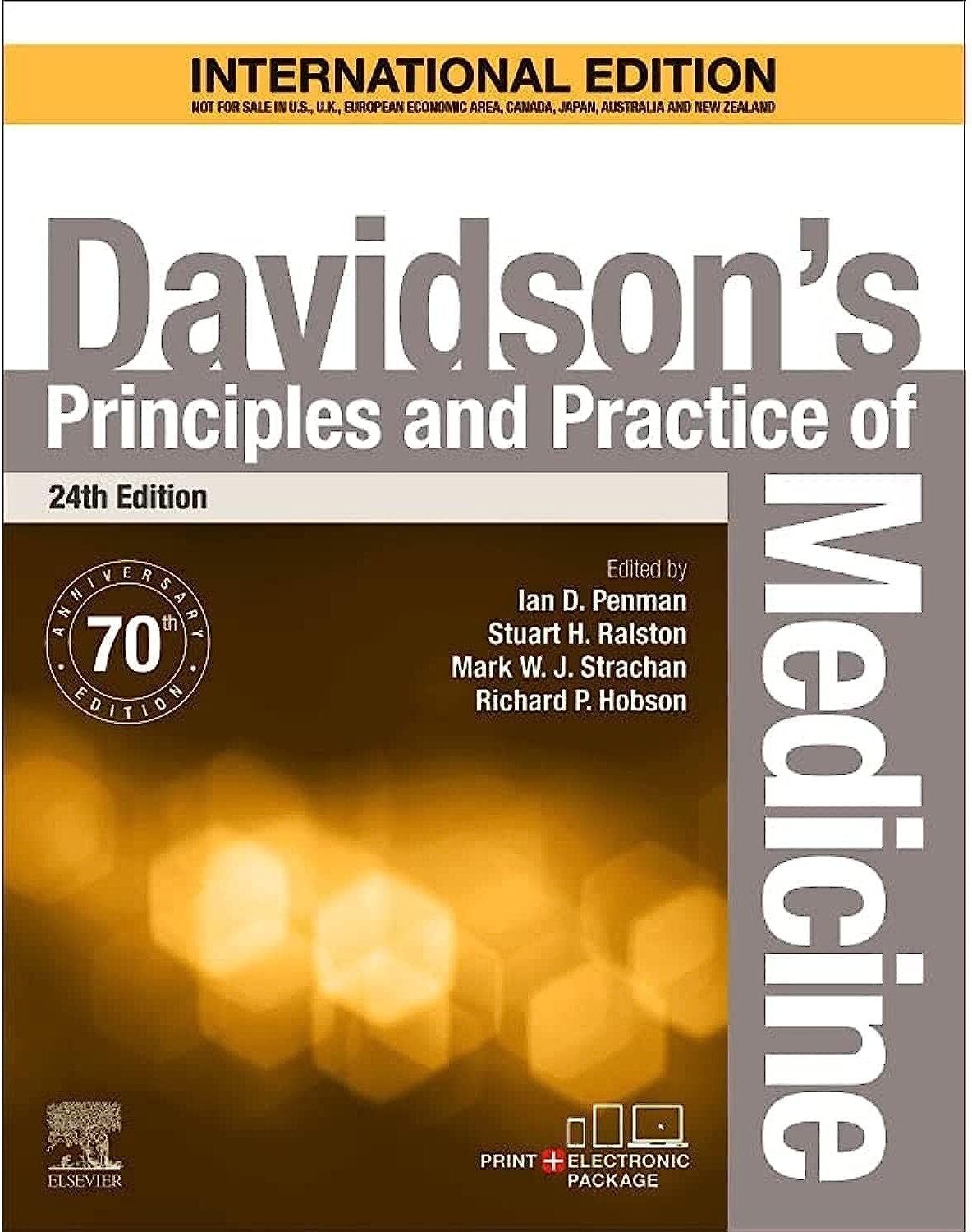
Elsevier Davidsons Principles and Practice of Medicine International EditionWell over two million medical students, doctors and other health professionals around the globe have owned a copy of Davidson’s Principles and Practice of Medicine since it was first published over 70 years ago. Now in its 24th Edition, this thoroughly updated textbook describes the pathophysiology and clinical features of the most frequently encountered conditions in the major specialties of adult medicine, and explains how to recognise, investigate, diagnose and manage them. Taking its origins from Sir Stanley Davidson’s much-admired lecture notes, Davidson’s has endured because it keeps pace with how modern medicine is taught and provides a wealth of trusted information in an easy-to-read, concise and beautifully illustrated format. Key features: Part 1 ‘Fundamentals of Medicine’ - provides an account of the principles of genetics, immunology, infectious diseases, population health, oncology and pain management, along with a discussion of the core principles behind clinical decision-making and good prescribing. Part 2 ‘Emergency and Critical Care Medicine’ - covers medical emergencies in poisoning, envenomation and medicine in austere environments, as well as common presentations in acute medicine and the recognition and management of the critically ill. Part 3 ‘Clinical Medicine’- covers the major medical specialties, each thoroughly revised and brought fully up to date. A new section on COVID-19 has been added and the impact of this infection is described throughout the book. Clinical Examination overviews - extended and updated to summarise the main elements for each system. Presenting Problems sections - provide a clear pathway for the assessment of and approach to the most common complaints in each specialty. Practice Point summaries - detail the practical skills that medical students and junior doctors must acquire. Emergency boxes - emphasise the core knowledge needed to manage acutely ill patients. In Old Age, In Pregnancy and In Adolescence boxes - highlight differences in the practice of medicine in these patient groups, and illustrate the interfaces between medical, obstetric and paediatric services. The text is extensively illustrated, with over 1000 diagrams, clinical photographs, and radiology and pathology images. The global perspective is enhanced by an International Advisory Board of experts from 11 countries and by leading authors from around the world.29,99 £*Shipping: 2,99 £Secure redirect to the provider
-
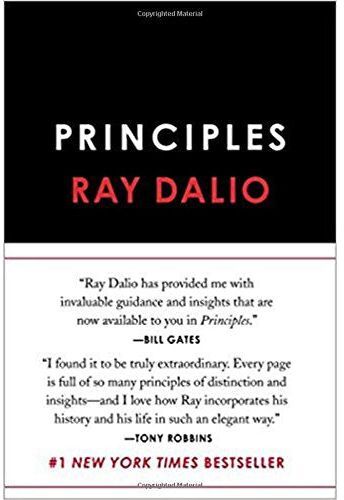
Simon & Schuster Principles: Life and Work by Ray Dalio#1 NEW YORK TIMES BESTSELLER * 5 MILLION COPIES SOLD “Significant...The book is both instructive and surprisingly moving.” —The New York Times Ray Dalio, one of the world’s most successful investors and entrepreneurs, shares the unconventional principles that he’s developed, refined, and used over the past forty years to create unique results in both life and business—and which any person or organization can adopt to help achieve their goals. In 1975, Ray Dalio founded an investment firm, Bridgewater Associates, out of his two-bedroom apartment in New York City. Forty years later, Bridgewater has made more money for its clients than any other hedge fund in history and grown into the fifth most important private company in the United States, according to Fortune magazine. Dalio himself has been named to Time magazine’s list of the 100 most influential people in the world. Along the way, Dalio discovered a set of unique principles that have led to Bridgewater’s exceptionally effective culture, which he describes as “an idea meritocracy that strives to achieve meaningful work and meaningful relationships through radical transparency.” It is these principles, and not anything special about Dalio—who grew up an ordinary kid in a middle-class Long Island neighborhood—that he believes are the reason behind his success. In Principles, Dalio shares what he’s learned over the course of his remarkable career. He argues that life, management, economics, and investing can all be systemized into rules and understood like machines. The book’s hundreds of practical lessons, which are built around his cornerstones of “radical truth” and “radical transparency,” include Dalio laying out the most effective ways for individuals and organizations to make decisions, approach challenges, and build strong teams. He also describes the innovative tools the firm uses to bring an idea meritocracy to life, such as creating “baseball cards” for all employees that distill their strengths and weaknesses, and employing computerized decision-making systems to make believability-weighted decisions. While the book brims with novel ideas for organizations and institutions, Principles also offers a clear, straightforward approach to decision-making that Dalio believes anyone can apply, no matter what they’re seeking to achieve. Here, from a man who has been called both “the Steve Jobs of investing” and “the philosopher king of the financial universe” (CIO magazine), is a rare opportunity to gain proven advice unlike anything you’ll find in the conventional business press.15,99 £*Shipping: 2,99 £Secure redirect to the provider
-
What are principles? How are people without principles?
Principles are fundamental beliefs or values that guide a person's behavior and decision-making. They serve as a moral compass and help individuals make ethical choices in their personal and professional lives. People without principles may act in a self-serving or unethical manner, lacking a sense of integrity and moral responsibility. Without principles, individuals may struggle to build trust and maintain healthy relationships with others, as their actions may be unpredictable and inconsistent. **
-
Love or principles?
It is important to strike a balance between love and principles in any relationship. While love is essential for emotional connection and support, principles provide a foundation for mutual respect and understanding. Both love and principles are necessary for a healthy and fulfilling relationship, as they help guide behavior and decision-making while also fostering a deep emotional connection. Ultimately, finding a harmonious blend of love and principles can lead to a strong and lasting bond. **
-
What are the orthographic principles of the lexical and textual principles?
The orthographic principles of lexical and textual principles refer to the rules and conventions governing the correct spelling, punctuation, and formatting of words and sentences in written language. Lexical principles focus on the correct spelling and usage of individual words, including understanding prefixes, suffixes, and root words. Textual principles, on the other hand, involve the correct organization and structure of sentences and paragraphs, including proper punctuation, capitalization, and paragraphing to ensure clarity and coherence in written communication. Both sets of principles are essential for effective written communication and help ensure that written texts are clear, accurate, and easy to read. **
-
What are Western principles?
Western principles generally refer to the values and beliefs that have historically shaped the political, social, and economic systems in Western societies. These principles often include concepts such as individualism, democracy, rule of law, human rights, and free market capitalism. They are often seen as promoting personal freedom, equality, and the protection of individual rights. However, it is important to note that these principles can vary across different Western countries and are subject to ongoing debate and interpretation. **
Do you have principles?
As an AI, I do not have personal beliefs or principles. I am programmed to provide information and assistance based on data and algorithms. My responses are generated based on the input I receive and the guidelines set by my creators. **
What are orthographic principles?
Orthographic principles are rules and conventions that govern the correct way to write and spell words in a language. These principles include guidelines for using capitalization, punctuation, and spelling. Following orthographic principles helps ensure clarity, consistency, and accuracy in written communication. Adhering to these principles also helps to maintain the standardization and uniformity of written language. **
Top-Angebote
Products related to Principles:
-
Simon & Schuster Principles Life and Work, Principles Your Guided Journal 2 Books Collection SetPrinciples: Life and Work, Principles Your Guided Journal 2 Books Collection Set Principles: Life and Work In Principles, Dalio shares what he’s learned over the course of his remarkable career. He argues that life, management, economics, and investing can all be systemized into rules and understood like machines. The book’s hundreds of practical lessons, which are built around his cornerstones of “radical truth” and “radical transparency,” include Dalio laying out the most effective ways for individuals and organizations to make decisions, approach challenges, and build strong teams. He also describes the innovative tools the firm uses to bring an idea meritocracy to life, such as creating “baseball cards” for all employees that distill their strengths and weaknesses, and employing computerized decision-making systems to make believability-weighted decisions. While the book brims with novel ideas for organizations and institutions, Principles also offers a clear, straightforward approach to decision-making that Dalio believes anyone can apply, no matter what they’re seeking to achieve. Principles: Your Guided Journal: With this new journal, Dalio takes his goal one step further to help readers reflect on and record their own principles. He does that by providing a series of guided exercises and questions for reflecting on what you’re like, what you value, and what principles will best help you achieve your goals. These exercises draw from key concepts in the original Principles book, including: 1. How to identify your strengths, weaknesses, motivations and preferences 2. How to use the 'five-step process' to achieve your goals 3. How to become both 'assertive and open-minded at the same time' 4. How to maximise your learning from your mistakes (which are inevitable)22,99 £*Shipping: 2,99 £Secure redirect to the provider
-
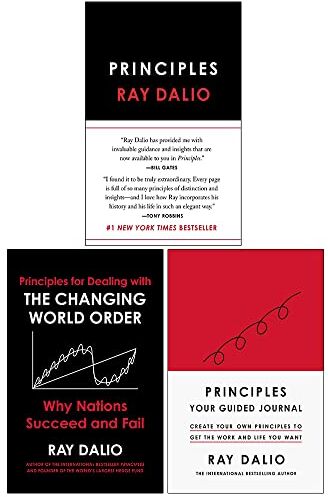
Simon and Schuster Ray Dalio Collection 3 Books Set (Principles Life and Work, Principles for Dealing with the Changing World Order, Principles Your Guided Journal)Ray Dalio Collection 3 Books Set (Principles Life and Work, Principles for Dealing with the Changing World Order, Principles Your Guided Journal) Principles Life and Work In Principles, Dalio shares what he’s learned over the course of his remarkable career. He argues that life, management, economics, and investing can all be systemized into rules and understood like machines. The book’s hundreds of practical lessons, which are built around his cornerstones of “radical truth” and “radical transparency,” include Dalio laying out the most effective ways for individuals and organizations to make decisions, approach challenges, and build strong teams. Principles for Dealing with the Changing World Order A few years ago, Ray Dalio noticed a confluence of political and economic conditions he hadn’t encountered before. They included huge debts and zero or near-zero interest rates that led to massive printing of money in the world’s three major reserve currencies; big political and social conflicts within countries, especially the US, due to the largest wealth, political and values disparities in more than 100 years; and the rising of a world power (China) to challenge the existing world power (US) and the existing world order. Principles Your Guided Journal In his international bestseller Principles, legendary investor Ray Dalio introduced millions of readers around the world to the unconventional approach he developed as the founder and builder of Bridgewater Associates, the largest and most successful hedge fund in the world. Dalio attributes his unique success to his process of recording, refining and acting on a set of well-defined principles, which are effectively decision-rules for getting what you want out of life and work.34,99 £*Shipping: 2,99 £Secure redirect to the provider
-
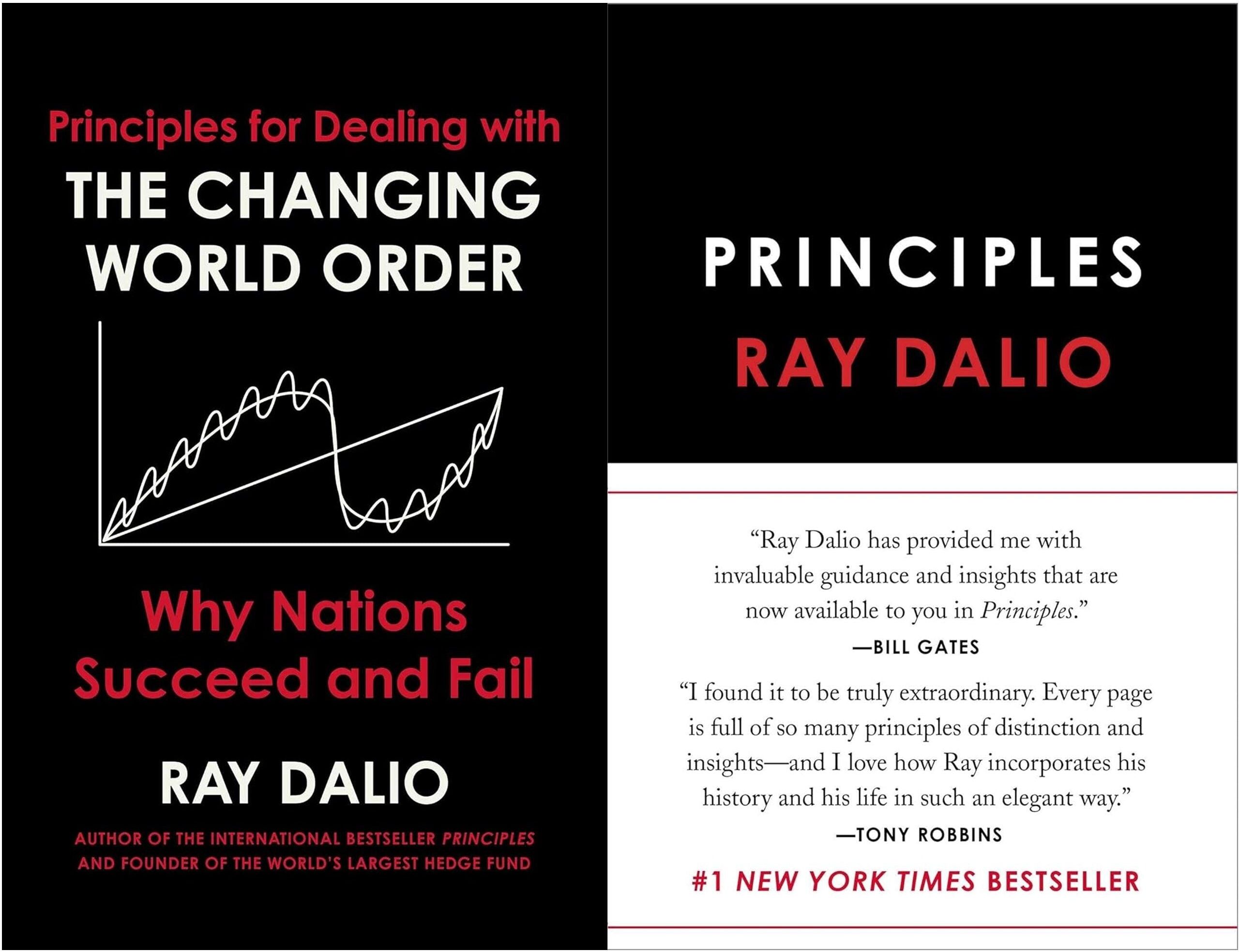
Simon & Schuster Principles and Principles for Dealing with the Changing World Order 2 Books Collection Set by Ray DalioRay Dalio Collection 2 Books Set (Principles Life and Work, Principles for Dealing with the Changing World Order): Principles Life and Work: In Principles, Dalio shares what he’s learned over the course of his remarkable career. He argues that life, management, economics, and investing can all be systemized into rules and understood like machines. The book’s hundreds of practical lessons, which are built around his cornerstones of “radical truth” and “radical transparency,” include Dalio laying out the most effective ways for individuals and organizations to make decisions, approach challenges, and build strong teams. Principles for Dealing with the Changing World Order: A few years ago, Ray Dalio noticed a confluence of political and economic conditions he hadn’t encountered before. They included huge debts and zero or near-zero interest rates that led to massive printing of money in the world’s three major reserve currencies; big political and social conflicts within countries, especially the US, due to the largest wealth, political and values disparities in more than 100 years; and the rising of a world power (China) to challenge the existing world power (US) and the existing world order.30,99 £*Shipping: 2,99 £Secure redirect to the provider
-
Simon & Schuster Principles: Your Guided Journal: Create Your Own Principles to Get the Work and Life You Want by Ray DalioIn his international bestseller Principles, legendary investor Ray Dalio introduced millions of readers around the world to the unconventional approach he developed as the founder and builder of Bridgewater Associates, the largest and most successful hedge fund in the world. Dalio attributes his unique success to his process of recording, refining and acting on a set of well-defined principles, which are effectively decision-rules for getting what you want out of life and work. His goal in publishing the book was to show readers the value of principle-based thinking so that they could develop their own principles, aligned with their own values, for getting whatever they wanted out of life. With this new journal, Dalio takes his goal one step further to help readers reflect on and record their own principles. He does that by providing a series of guided exercises and questions for reflecting on what you’re like, what you value, and what principles will best help you achieve your goals. These exercises draw from key concepts in the original Principles book, including: 1. How to identify your strengths, weaknesses, motivations and preferences 2. How to use the 'five-step process' to achieve your goals 3. How to become both 'assertive and open-minded at the same time' 4. How to maximise your learning from your mistakes (which are inevitable) All of these exercises can optionally be enhanced using the free Principles in Action iOS and Android app, which provides an even more interactive, multimedia experience, and they are followed by a number of blank journal pages containing thought-provoking and unconventional prompts from Principles aimed at helping you formulate your own principles. The experience concludes with a structured reflection on where you and your loved ones are along life’s journey, leaving you with a highly personalised, practical playbook for achieving success in the years ahead.12,99 £*Shipping: 2,99 £Secure redirect to the provider
-
What are different principles of development?
There are several principles of development that influence how individuals grow and change over time. These include the principles of lifelong development, multidimensional development, multidirectional development, plasticity, and contextual influences. Lifelong development emphasizes that development is a continuous process that occurs throughout the lifespan. Multidimensional development recognizes that individuals develop in multiple areas such as physical, cognitive, and socioemotional domains. Multidirectional development acknowledges that development can involve growth and decline in different aspects. Plasticity refers to the capacity for change and flexibility in development, while contextual influences highlight the impact of environmental factors on development. **
-
Which principles?
The principles referred to in the context of this conversation are likely the fundamental beliefs or guidelines that govern a particular system, organization, or practice. These principles could include values such as honesty, integrity, respect, fairness, and accountability. Adhering to these principles helps ensure ethical behavior, consistency, and effectiveness in decision-making and actions. **
-
What are principles? How are people without principles?
Principles are fundamental beliefs or values that guide a person's behavior and decision-making. They serve as a moral compass and help individuals make ethical choices in their personal and professional lives. People without principles may act in a self-serving or unethical manner, lacking a sense of integrity and moral responsibility. Without principles, individuals may struggle to build trust and maintain healthy relationships with others, as their actions may be unpredictable and inconsistent. **
-
Love or principles?
It is important to strike a balance between love and principles in any relationship. While love is essential for emotional connection and support, principles provide a foundation for mutual respect and understanding. Both love and principles are necessary for a healthy and fulfilling relationship, as they help guide behavior and decision-making while also fostering a deep emotional connection. Ultimately, finding a harmonious blend of love and principles can lead to a strong and lasting bond. **
Similar search terms for Principles
-
Elsevier Davidsons Principles and Practice of Medicine International EditionWell over two million medical students, doctors and other health professionals around the globe have owned a copy of Davidson’s Principles and Practice of Medicine since it was first published over 70 years ago. Now in its 24th Edition, this thoroughly updated textbook describes the pathophysiology and clinical features of the most frequently encountered conditions in the major specialties of adult medicine, and explains how to recognise, investigate, diagnose and manage them. Taking its origins from Sir Stanley Davidson’s much-admired lecture notes, Davidson’s has endured because it keeps pace with how modern medicine is taught and provides a wealth of trusted information in an easy-to-read, concise and beautifully illustrated format. Key features: Part 1 ‘Fundamentals of Medicine’ - provides an account of the principles of genetics, immunology, infectious diseases, population health, oncology and pain management, along with a discussion of the core principles behind clinical decision-making and good prescribing. Part 2 ‘Emergency and Critical Care Medicine’ - covers medical emergencies in poisoning, envenomation and medicine in austere environments, as well as common presentations in acute medicine and the recognition and management of the critically ill. Part 3 ‘Clinical Medicine’- covers the major medical specialties, each thoroughly revised and brought fully up to date. A new section on COVID-19 has been added and the impact of this infection is described throughout the book. Clinical Examination overviews - extended and updated to summarise the main elements for each system. Presenting Problems sections - provide a clear pathway for the assessment of and approach to the most common complaints in each specialty. Practice Point summaries - detail the practical skills that medical students and junior doctors must acquire. Emergency boxes - emphasise the core knowledge needed to manage acutely ill patients. In Old Age, In Pregnancy and In Adolescence boxes - highlight differences in the practice of medicine in these patient groups, and illustrate the interfaces between medical, obstetric and paediatric services. The text is extensively illustrated, with over 1000 diagrams, clinical photographs, and radiology and pathology images. The global perspective is enhanced by an International Advisory Board of experts from 11 countries and by leading authors from around the world.29,99 £*Shipping: 2,99 £Secure redirect to the provider
-
Simon & Schuster Principles: Life and Work by Ray Dalio#1 NEW YORK TIMES BESTSELLER * 5 MILLION COPIES SOLD “Significant...The book is both instructive and surprisingly moving.” —The New York Times Ray Dalio, one of the world’s most successful investors and entrepreneurs, shares the unconventional principles that he’s developed, refined, and used over the past forty years to create unique results in both life and business—and which any person or organization can adopt to help achieve their goals. In 1975, Ray Dalio founded an investment firm, Bridgewater Associates, out of his two-bedroom apartment in New York City. Forty years later, Bridgewater has made more money for its clients than any other hedge fund in history and grown into the fifth most important private company in the United States, according to Fortune magazine. Dalio himself has been named to Time magazine’s list of the 100 most influential people in the world. Along the way, Dalio discovered a set of unique principles that have led to Bridgewater’s exceptionally effective culture, which he describes as “an idea meritocracy that strives to achieve meaningful work and meaningful relationships through radical transparency.” It is these principles, and not anything special about Dalio—who grew up an ordinary kid in a middle-class Long Island neighborhood—that he believes are the reason behind his success. In Principles, Dalio shares what he’s learned over the course of his remarkable career. He argues that life, management, economics, and investing can all be systemized into rules and understood like machines. The book’s hundreds of practical lessons, which are built around his cornerstones of “radical truth” and “radical transparency,” include Dalio laying out the most effective ways for individuals and organizations to make decisions, approach challenges, and build strong teams. He also describes the innovative tools the firm uses to bring an idea meritocracy to life, such as creating “baseball cards” for all employees that distill their strengths and weaknesses, and employing computerized decision-making systems to make believability-weighted decisions. While the book brims with novel ideas for organizations and institutions, Principles also offers a clear, straightforward approach to decision-making that Dalio believes anyone can apply, no matter what they’re seeking to achieve. Here, from a man who has been called both “the Steve Jobs of investing” and “the philosopher king of the financial universe” (CIO magazine), is a rare opportunity to gain proven advice unlike anything you’ll find in the conventional business press.15,99 £*Shipping: 2,99 £Secure redirect to the provider
-
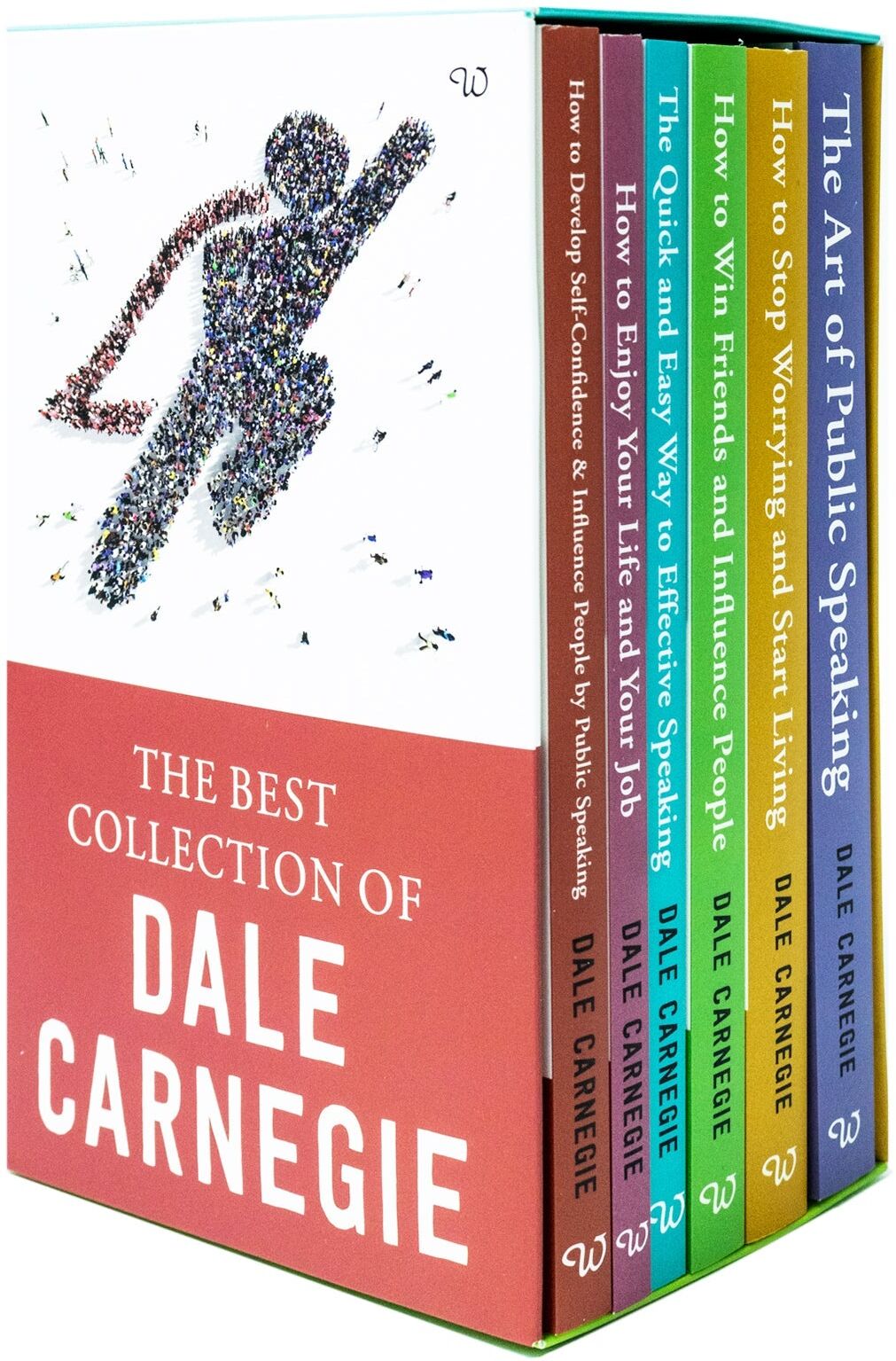
Vermilion Dale Carnegie Personal Development Collection – 6 Book Set Self-Help, Communication & Success ClassicsDale Carnegie Personal Development Collection 6 Books Set Transform your mindset, confidence, and communication skills with the Dale Carnegie Personal Development – 6 Books Collection Set by Dale Carnegie. This powerful collection brings together some of Carnegie’s most influential works on success, relationships, leadership, and personal growth. Known for his timeless principles and practical advice, Carnegie’s teachings have helped millions of readers improve their confidence, build meaningful relationships, and achieve their goals. Perfect for professionals, students, entrepreneurs, and anyone looking to grow personally and professionally, this set offers a complete guide to mastering communication and success. Why Readers Love This Collection: Includes 6 bestselling personal development books Timeless advice on communication, confidence, and leadership Easy-to-understand, practical strategies Ideal for beginners and experienced readers Perfect for self-improvement and career growth A must-have for anyone serious about personal development, the Dale Carnegie Collection delivers proven principles for success in life and work. Description How to Develop Self-confidence and Influence People by Public Speaking Drawing on Dale years of experience as a business trainer this book will show you how to overcome the natural fear of public speaking, to become a successful speaker and even learn to enjoy it. How To Stop Worrying And Start Living Worry affects everyone and descends with ease upon work, money, family life and relationships. This book offers practical strategies for breaking out of this destructive before it breaks you. How To Enjoy Your Life And Job Life is very much what we make it, and since most of us spend the greater part of our lives at work, it follows that we should be making the best of our working lives. This book demonstrates that anyone can achieve greater satisfaction in both their home life and their job by learning to integrate business, social and personal . The Quick And Easy Way To Effective Speaking Good public speakers are made, not born - or so thinks Dale Carnegie, the pioneer of personal business skills. Yet business, social and personal satisfaction depend heavily upon a persons ability to communicate clearly. Public speaking is an important skill which anyone can acquire and develop. The Art of Public Speaking Carnegie draws upon his experience as a salesman and lecturer to counsel readers on how to overcome self-consciousness and express themselves in an easy-to-understand, high-impact manner. How to Win Friends and Influence People His advice has stood the test of time and will teach you how to make friends quickly and easily, increase your popularity, persuade people to follow your way of thinking, enable you to win new clients and customers, become a better speaker, boost enthusiasm among your colleagues. Tags; Dale Carnegie Books10,99 £*Shipping: 2,99 £Secure redirect to the provider
-
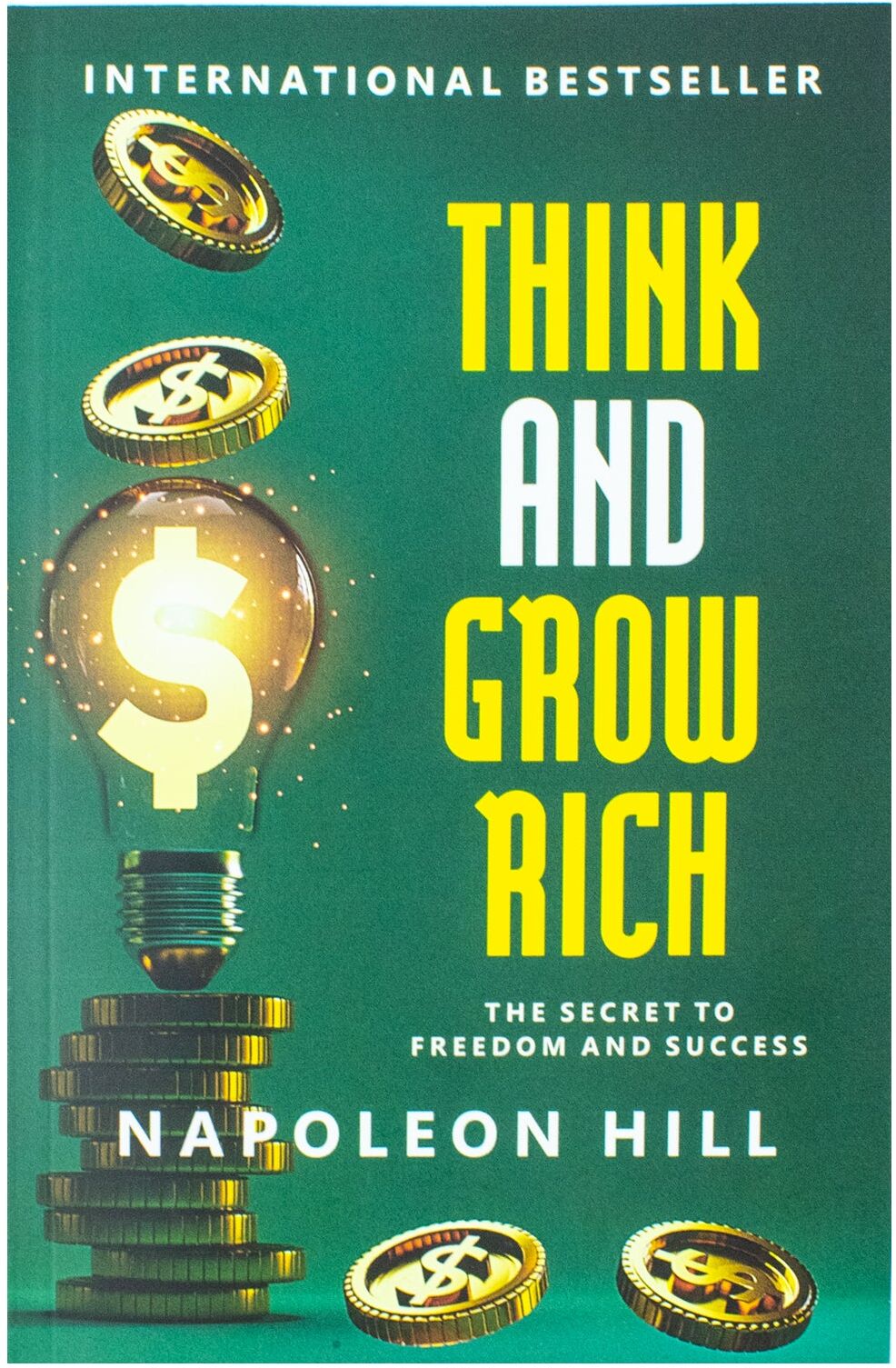
Wilco Publishing Think and Grow Rich by Napoleon Hill Classic Personal Development, Success, Wealth, Mindset & Motivation Self Help BookDiscover one of the most influential personal development classics with Think and Grow Rich by Napoleon Hill. Originally published in 1937, Think and Grow Rich explores the principles and habits Hill associated with achievement, ambition, persistence, goal setting and personal success. Rather than focusing solely on money, the book examines how mindset, clear goals, determination and consistent action can influence progress towards personal and professional ambitions. Hill presents principles intended to help readers develop greater focus, confidence and persistence when pursuing their goals. A longstanding classic in the fields of self-help, motivation, business and personal development, Think and Grow Rich remains popular with entrepreneurs, professionals and readers interested in improving their approach to achievement and success. Whether you're building a personal development library, looking for motivational reading or searching for a gift for an aspiring entrepreneur, this enduring classic is an excellent choice. Key Features Classic personal development book by Napoleon Hill Focuses on success, mindset and goal setting Explores motivation, persistence and achievement Popular with entrepreneurs and business readers Ideal for self-improvement and motivational reading Timeless addition to a personal development library Great gift for business and self-help readers2,99 £*Shipping: 1,99 £Secure redirect to the provider
-
What are the orthographic principles of the lexical and textual principles?
The orthographic principles of lexical and textual principles refer to the rules and conventions governing the correct spelling, punctuation, and formatting of words and sentences in written language. Lexical principles focus on the correct spelling and usage of individual words, including understanding prefixes, suffixes, and root words. Textual principles, on the other hand, involve the correct organization and structure of sentences and paragraphs, including proper punctuation, capitalization, and paragraphing to ensure clarity and coherence in written communication. Both sets of principles are essential for effective written communication and help ensure that written texts are clear, accurate, and easy to read. **
-
What are Western principles?
Western principles generally refer to the values and beliefs that have historically shaped the political, social, and economic systems in Western societies. These principles often include concepts such as individualism, democracy, rule of law, human rights, and free market capitalism. They are often seen as promoting personal freedom, equality, and the protection of individual rights. However, it is important to note that these principles can vary across different Western countries and are subject to ongoing debate and interpretation. **
-
Do you have principles?
As an AI, I do not have personal beliefs or principles. I am programmed to provide information and assistance based on data and algorithms. My responses are generated based on the input I receive and the guidelines set by my creators. **
-
What are orthographic principles?
Orthographic principles are rules and conventions that govern the correct way to write and spell words in a language. These principles include guidelines for using capitalization, punctuation, and spelling. Following orthographic principles helps ensure clarity, consistency, and accuracy in written communication. Adhering to these principles also helps to maintain the standardization and uniformity of written language. **
* All prices are inclusive of VAT and, if applicable, plus shipping costs. The offer information is based on the details provided by the respective shop and is updated through automated processes. Real-time updates do not occur, so deviations can occur in individual cases. ** Note: Parts of this content were created by AI.