Buy leadership-training.eu ?
We are moving the project
leadership-training.eu .
Are you interested in purchasing the domain
leadership-training.eu ?
domain@kv-gmbh.de · 0541-91531010
Buy leadership-training.eu ?
What are the differences between Buddhism and Tibetan Buddhism?
Buddhism is a broader religion that encompasses various traditions and schools, while Tibetan Buddhism is a specific branch of Buddhism that developed in Tibet. Tibetan Buddhism incorporates elements of Tibetan culture, such as rituals, deities, and practices like chanting and visualization. It also places a strong emphasis on the teachings of Tibetan Buddhist masters and the importance of the Dalai Lama. Additionally, Tibetan Buddhism includes unique practices such as the use of prayer flags, prayer wheels, and mandalas. **
What is the difference between Buddhism and Zen Buddhism?
Buddhism is a broader religion and philosophy that encompasses a variety of traditions and practices, while Zen Buddhism is a specific school or branch of Mahayana Buddhism that emphasizes meditation and direct experience of enlightenment. Zen Buddhism places a strong emphasis on the practice of meditation (zazen) as a means to achieve enlightenment, while traditional Buddhism incorporates a wider range of practices such as chanting, rituals, and study of Buddhist scriptures. Additionally, Zen Buddhism often focuses on the teachings of specific Zen masters and the importance of the teacher-student relationship in transmitting wisdom and insight. **
Similar search terms for Buddhism
Top-Angebote
Products related to Buddhism:
-
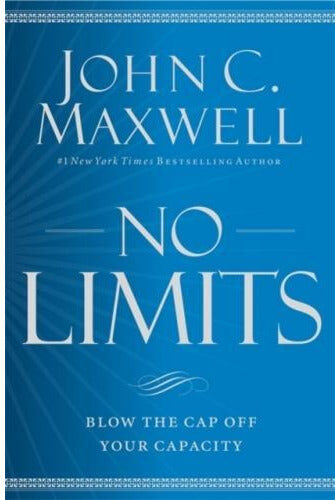
Little Brown Book Group No Limits: Blow the Cap Off Your Capacity by John C. Maxwell – Personal Growth & Leadership Development GuideNo Limits: Blow the CAP Off Your Capacity Description We often treat the word capacity as if it were a natural law of limitation. Unfortunately; most of us are much more comfortable defining what we perceive is off limits rather than what's possible. Could it be that many people have allowed what they perceive as capacity to define them? Have they allowed their perception to limit their attitudes about their potential? In his newest book; John Maxwell identifies 17 core capacities. Some of these are abilities we all already possess; such as energy; creativity and leadership. Others are aspects of our lives controlled by our choices; like our attitudes; character; and intentionality. Maxwell examines each of these 17 capacities; and provides clear and actionable advice on how you can increase your potential in each. He will guide you on how to identify; grow; and apply your critical capacities to your daily life. Once you've blown the 'cap' off your capacities; you'll find yourself more successful--and fulfilled--in your daily life.5,99 £*Shipping: 2,99 £Secure redirect to the provider
-
Wilco International LLP How to Win Friends and Influence People by Dale Carnegie Classic Self Help Book on Communication, Leadership, Confidence & Personal DevelopmentDiscover one of the world's best-known personal development books with How to Win Friends and Influence People by Dale Carnegie. First published in 1936, this enduring classic presents practical principles for communicating effectively, building positive relationships and working successfully with other people. Through memorable examples and straightforward advice, Carnegie explores how to make a positive impression, handle disagreements constructively, encourage cooperation and become a more effective communicator. The principles can be applied across everyday life, from personal relationships and social situations to business, management, sales, networking and leadership. Accessible and practical, How to Win Friends and Influence People remains popular with readers interested in improving their communication skills, confidence, interpersonal relationships and professional development. Key Features Classic personal development book by Dale Carnegie Practical principles for improving communication Explores relationships, leadership and interpersonal skills Useful for business, management, sales and networking Helps readers understand effective people skills Suitable for personal and professional development Excellent gift for entrepreneurs, managers and self-improvement readers9,99 £*Shipping: 2,99 £Secure redirect to the provider
-
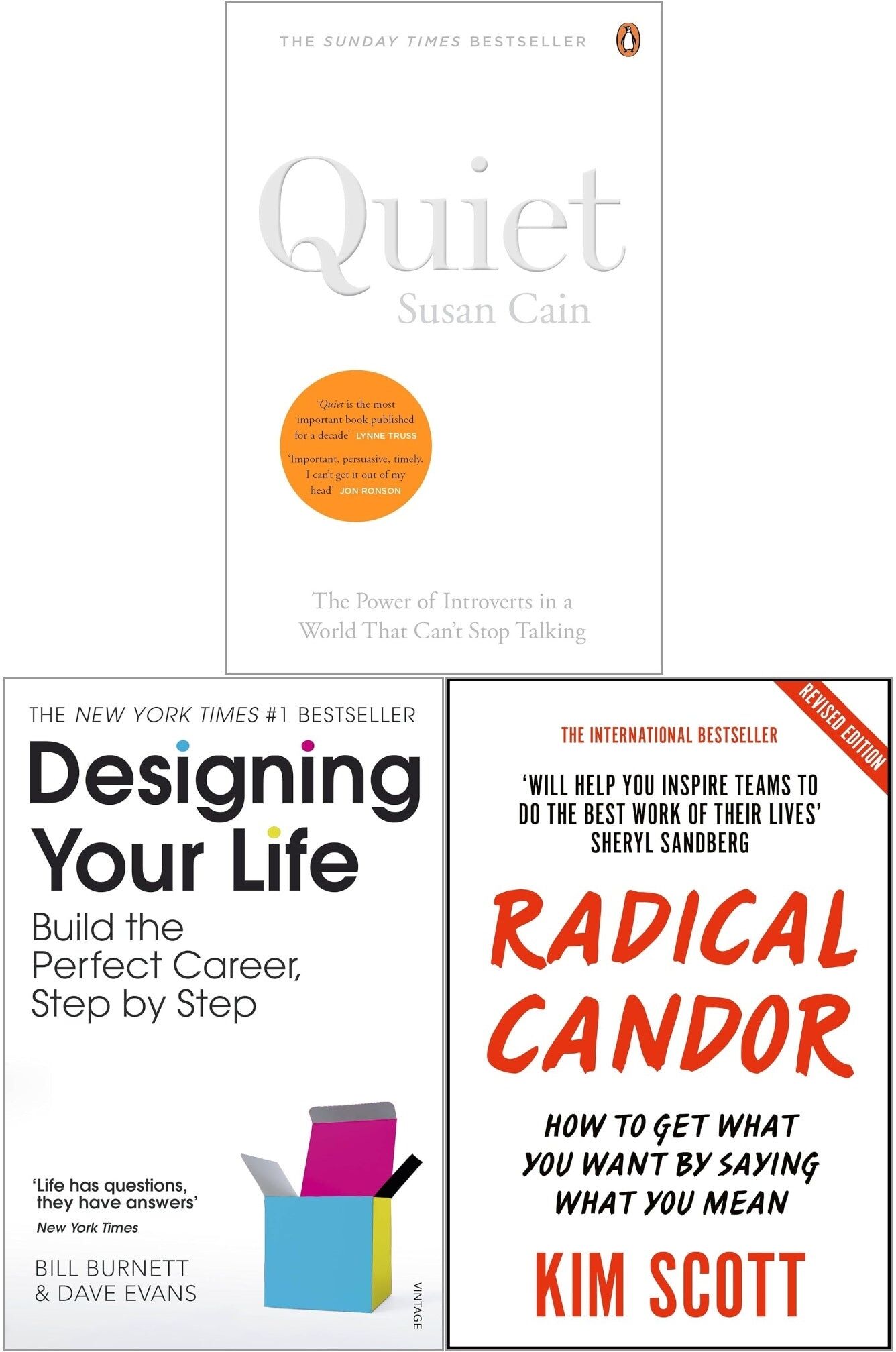
Penguin/Pan Macmillan Designing Your Life, Radical Candor and Quiet 3 Books Collection Set Personal Development, Leadership, Career Success & Self ImprovementDesigning Your Life, Radical Candor and Quiet 3 Books Collection Set Designing Your Life by Bill Burnett & Dave Evans Stanford innovators Bill Burnett and Dave Evans show us how design thinking can help us create a life that is both meaningful and fulfilling, regardless of who and where we are, our careers and our age. Designing Your Life puts forward the idea that the same design thinking responsible for amazing technology, products and spaces can be used to build towards a better life and career by a design of your own making. Radical Candor by Kim Scott Radical Candor by Kim Scott is a groundbreaking leadership and communication guide that teaches how to give feedback effectively, build trust, and create high-performing teams without becoming harsh—or avoiding difficult conversations. Based on Scott’s experience at Google, Apple and Silicon Valley startups, Radical Candor introduces a simple but powerful framework built on two pillars: Care Personally Challenge Directly The book provides practical tools for giving honest feedback, fostering open communication, strengthening working relationships, and becoming a more compassionate and impactful leader. Quiet by Susan Cain Quiet, the Sunday Times and New York Times Bestseller by Susan Cain, will permanently change how we see introverts - and how you see yourself. Our lives are driven by a fact most of us cant name and dont understand: whether were an introvert or an extrovert. This defines who our friends and lovers are, which careers we choose, and whether we blush when were embarrassed. At least a third of us are on the introverted side. Some of the worlds most talented people are introverts. Without them, we wouldnt have the Apple computer, the theory of relativity and Van Goghs sunflowers.16,99 £*Shipping: 2,99 £Secure redirect to the provider
-
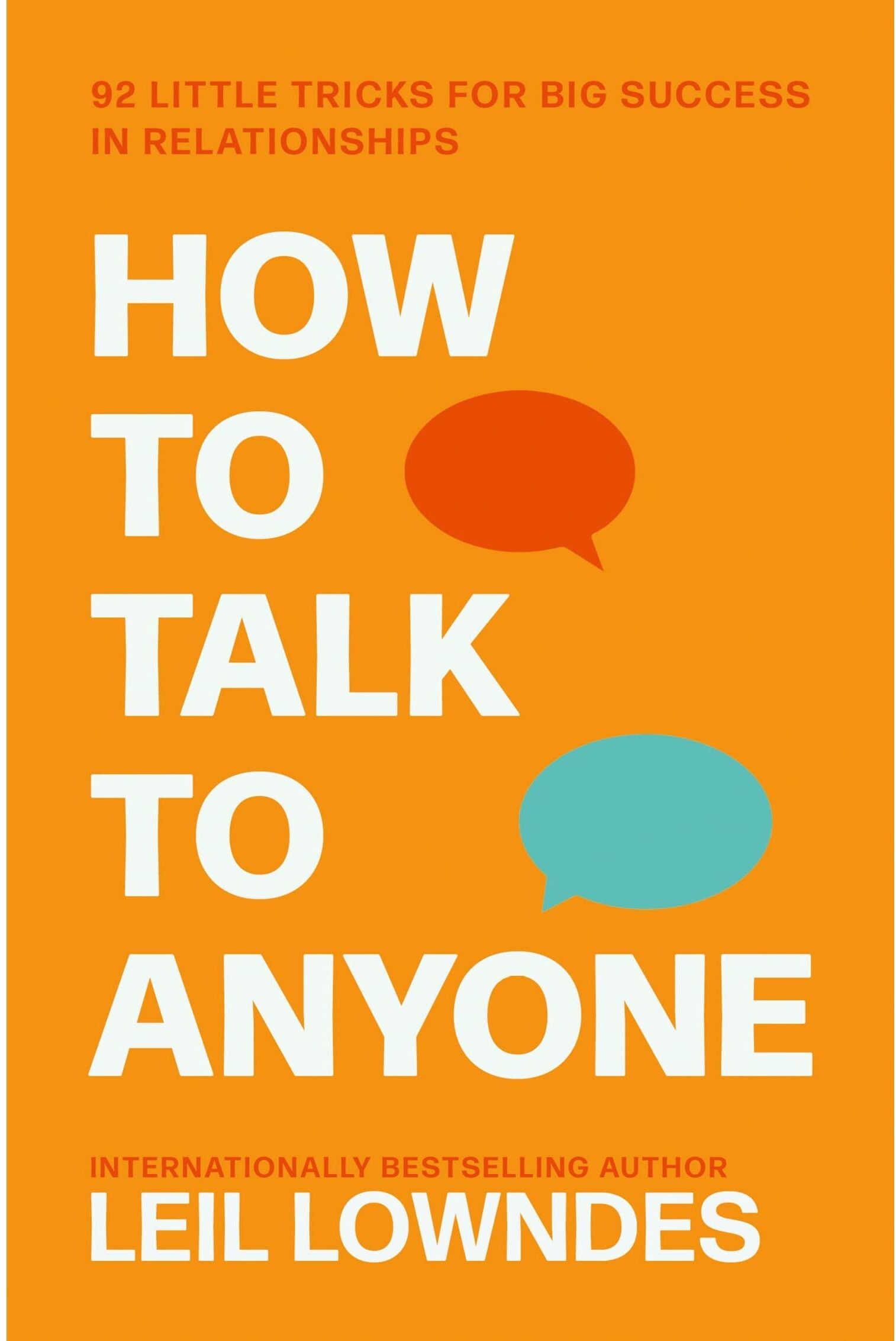
HARPERCOLLINS How to Talk to Anyone – 92 Little Tricks for Big Success in Relationships by Leil Lowndes Communication & Social Skills BestsellerMaster the art of confident communication. In How to Talk to Anyone: 92 Little Tricks for Big Success in Relationships, bestselling author and communication expert Leil Lowndes shares practical, easy-to-use techniques to help you connect with people in any situation. From networking events and job interviews to social gatherings and everyday conversations, this book shows you how to communicate with confidence, charisma, and impact. Packed with proven strategies on body language, first impressions, conversation starters, and listening skills, this timeless guide helps you overcome social anxiety, build rapport instantly, and leave a lasting impression. Whether you want to improve your personal relationships or advance your professional life, this book offers tools you can apply immediately. What You’ll Learn: How to start and end conversations effortlessly Secrets of confident body language and eye contact Techniques to build instant rapport and trust How to speak with authority and warmth Communication skills for work, dating, and social life A must-read for anyone looking to improve their social skills, networking ability, and personal confidence, How to Talk to Anyone is a classic self-help bestseller with lasting value.4,89 £*Shipping: 1,99 £Secure redirect to the provider
-
Is Buddhism illogical?
Buddhism is not inherently illogical. It is a complex and diverse belief system that encompasses a wide range of philosophical and ethical teachings. While some aspects of Buddhist doctrine may seem counterintuitive or difficult to understand from a Western perspective, they are based on a different cultural and philosophical framework. Many Buddhist teachings emphasize the importance of critical thinking and personal experience, and encourage followers to question and explore their beliefs. Ultimately, whether Buddhism is considered logical or not may depend on one's own perspective and understanding of its teachings. **
-
What is the difference between Zen Buddhism and regular Buddhism?
The main difference between Zen Buddhism and regular Buddhism lies in their approach to meditation and enlightenment. Zen Buddhism, which originated in China and later developed in Japan, emphasizes the practice of meditation (zazen) as the primary means to attain enlightenment. It focuses on direct experience and intuitive understanding, often through the guidance of a teacher. Regular Buddhism, on the other hand, encompasses a variety of traditions and practices, with meditation being just one of them. It places more emphasis on the study of scriptures, ethical conduct, and the development of wisdom and compassion. While both Zen Buddhism and regular Buddhism share the same core teachings of the Four Noble Truths and the Eightfold Path, their methods and emphasis on practice differ. **
-
What is your Buddhism?
My Buddhism is a personal and spiritual practice that focuses on the teachings of the Buddha, such as the Four Noble Truths and the Eightfold Path. It is a path of self-discovery, mindfulness, compassion, and seeking to alleviate suffering in myself and others. I strive to cultivate a deep understanding of impermanence, interconnectedness, and the nature of reality, and to live a life guided by these principles. My Buddhism is a journey of continuous learning, growth, and seeking inner peace and enlightenment. **
-
Does Buddhism have karma?
Yes, Buddhism does have the concept of karma. In Buddhism, karma refers to the law of cause and effect, where one's actions and intentions have consequences that affect their future experiences. Good actions lead to positive karma and favorable outcomes, while negative actions lead to negative karma and unfavorable outcomes. The concept of karma is central to the Buddhist belief in the cycle of birth, death, and rebirth, known as samsara, and it emphasizes the importance of ethical behavior and mindfulness in shaping one's destiny. **


Can one join Buddhism?
Yes, one can join Buddhism by taking refuge in the Three Jewels (Buddha, Dharma, and Sangha) and formally becoming a Buddhist through a ceremony called "taking refuge." This ceremony is often performed by a Buddhist monk or teacher and signifies a commitment to following the Buddhist path. Additionally, one can also participate in Buddhist practices, study Buddhist teachings, and become part of a Buddhist community to deepen their understanding and connection to the tradition. Buddhism is open to anyone who is sincerely interested in its teachings and practices, regardless of their background or previous beliefs. **
Can Buddhism be preserved?
Yes, Buddhism can be preserved through the continued practice and teachings of its principles, as well as through the preservation of its sacred texts, artifacts, and historical sites. Additionally, the efforts of Buddhist communities and organizations to pass down their traditions and rituals to future generations can help ensure the preservation of Buddhism. It is also important for governments and international organizations to support the protection and conservation of Buddhist heritage sites and artifacts. Overall, the preservation of Buddhism requires a collective effort from both the Buddhist community and society at large. **
Top-Angebote
Products related to Buddhism:
-
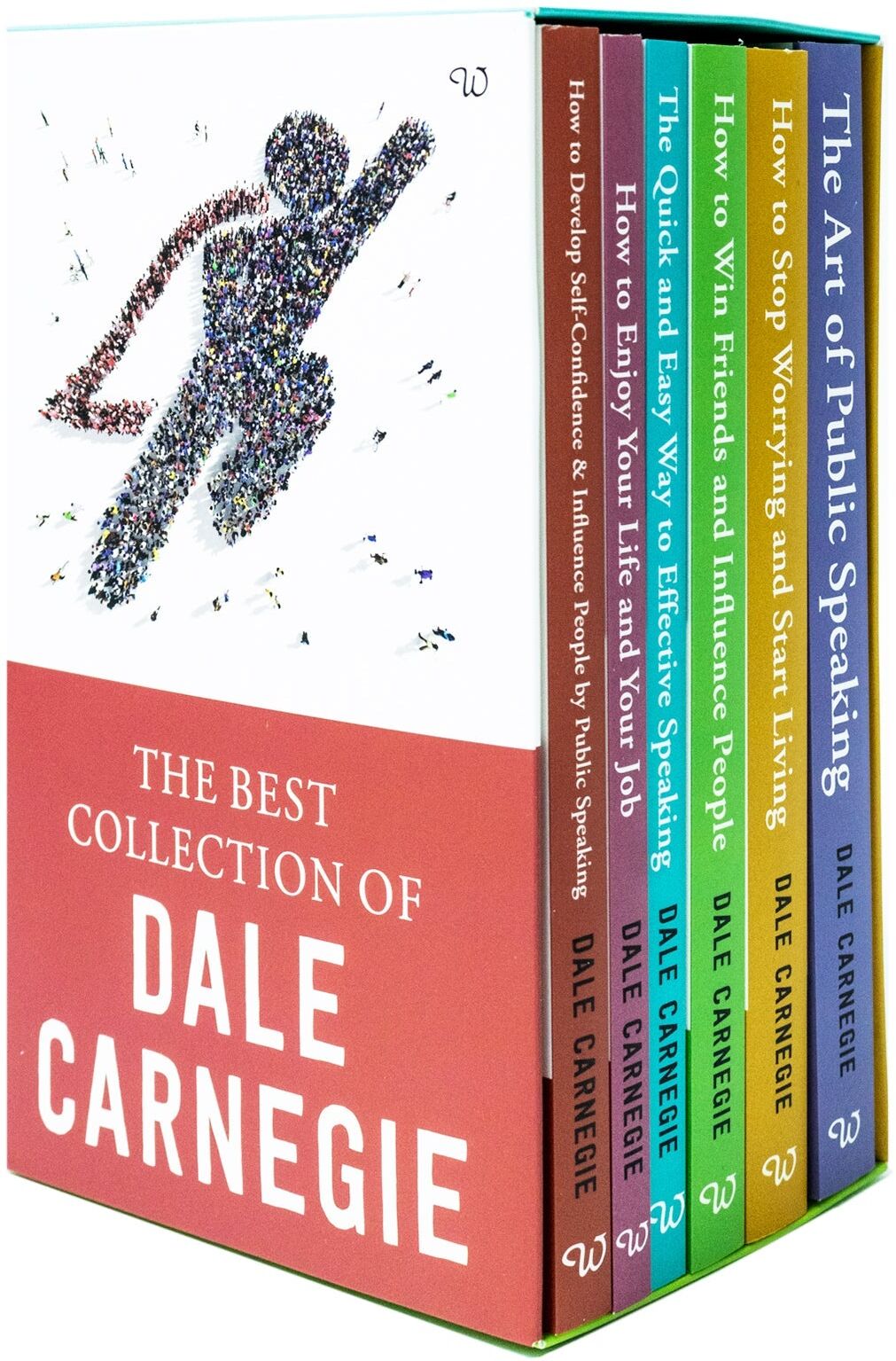
Vermilion Dale Carnegie Personal Development Collection – 6 Book Set Self-Help, Communication & Success ClassicsDale Carnegie Personal Development Collection 6 Books Set Transform your mindset, confidence, and communication skills with the Dale Carnegie Personal Development – 6 Books Collection Set by Dale Carnegie. This powerful collection brings together some of Carnegie’s most influential works on success, relationships, leadership, and personal growth. Known for his timeless principles and practical advice, Carnegie’s teachings have helped millions of readers improve their confidence, build meaningful relationships, and achieve their goals. Perfect for professionals, students, entrepreneurs, and anyone looking to grow personally and professionally, this set offers a complete guide to mastering communication and success. Why Readers Love This Collection: Includes 6 bestselling personal development books Timeless advice on communication, confidence, and leadership Easy-to-understand, practical strategies Ideal for beginners and experienced readers Perfect for self-improvement and career growth A must-have for anyone serious about personal development, the Dale Carnegie Collection delivers proven principles for success in life and work. Description How to Develop Self-confidence and Influence People by Public Speaking Drawing on Dale years of experience as a business trainer this book will show you how to overcome the natural fear of public speaking, to become a successful speaker and even learn to enjoy it. How To Stop Worrying And Start Living Worry affects everyone and descends with ease upon work, money, family life and relationships. This book offers practical strategies for breaking out of this destructive before it breaks you. How To Enjoy Your Life And Job Life is very much what we make it, and since most of us spend the greater part of our lives at work, it follows that we should be making the best of our working lives. This book demonstrates that anyone can achieve greater satisfaction in both their home life and their job by learning to integrate business, social and personal . The Quick And Easy Way To Effective Speaking Good public speakers are made, not born - or so thinks Dale Carnegie, the pioneer of personal business skills. Yet business, social and personal satisfaction depend heavily upon a persons ability to communicate clearly. Public speaking is an important skill which anyone can acquire and develop. The Art of Public Speaking Carnegie draws upon his experience as a salesman and lecturer to counsel readers on how to overcome self-consciousness and express themselves in an easy-to-understand, high-impact manner. How to Win Friends and Influence People His advice has stood the test of time and will teach you how to make friends quickly and easily, increase your popularity, persuade people to follow your way of thinking, enable you to win new clients and customers, become a better speaker, boost enthusiasm among your colleagues. Tags; Dale Carnegie Books10,99 £*Shipping: 2,99 £Secure redirect to the provider
-
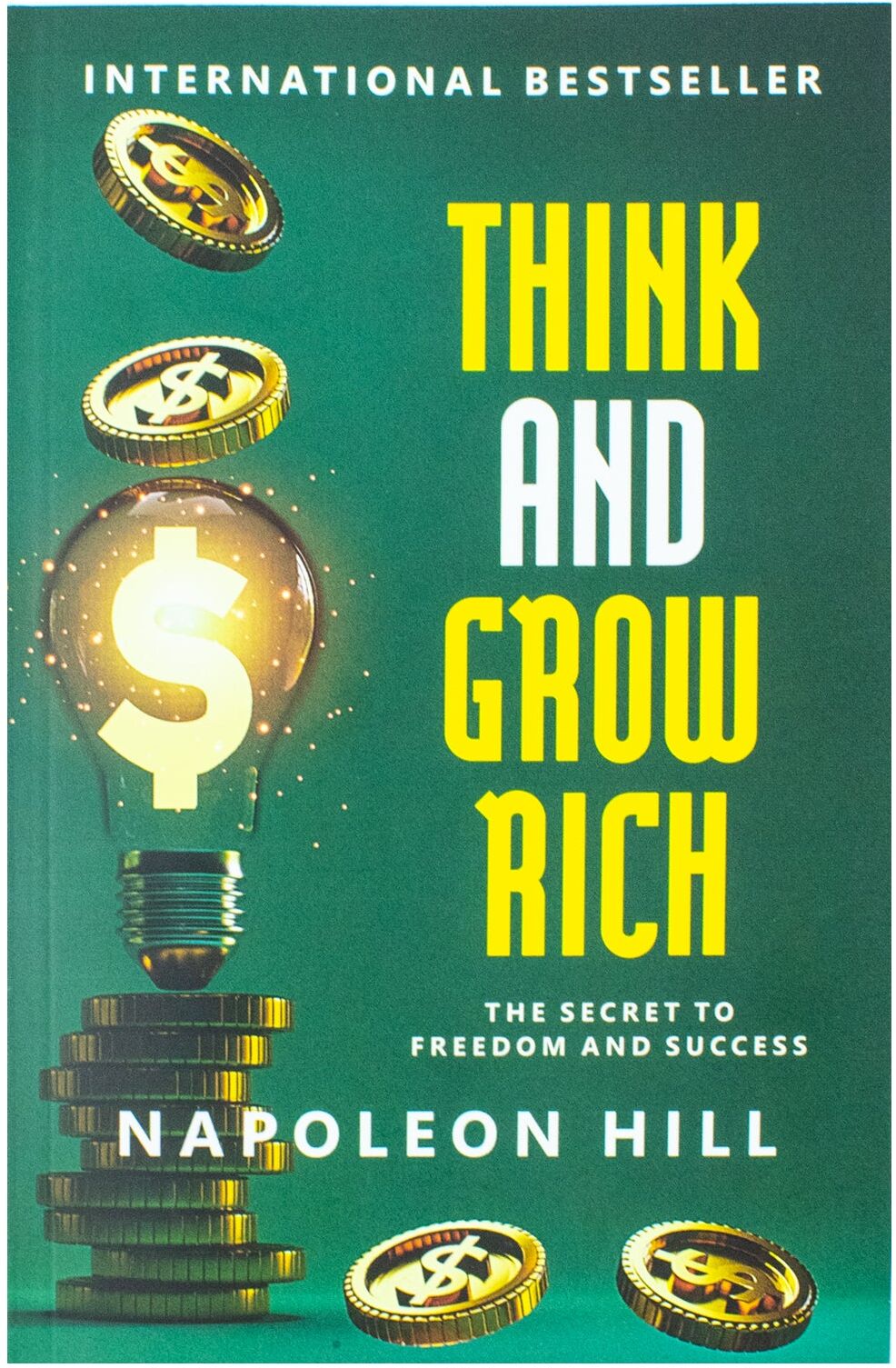
Wilco Publishing Think and Grow Rich by Napoleon Hill Classic Personal Development, Success, Wealth, Mindset & Motivation Self Help BookDiscover one of the most influential personal development classics with Think and Grow Rich by Napoleon Hill. Originally published in 1937, Think and Grow Rich explores the principles and habits Hill associated with achievement, ambition, persistence, goal setting and personal success. Rather than focusing solely on money, the book examines how mindset, clear goals, determination and consistent action can influence progress towards personal and professional ambitions. Hill presents principles intended to help readers develop greater focus, confidence and persistence when pursuing their goals. A longstanding classic in the fields of self-help, motivation, business and personal development, Think and Grow Rich remains popular with entrepreneurs, professionals and readers interested in improving their approach to achievement and success. Whether you're building a personal development library, looking for motivational reading or searching for a gift for an aspiring entrepreneur, this enduring classic is an excellent choice. Key Features Classic personal development book by Napoleon Hill Focuses on success, mindset and goal setting Explores motivation, persistence and achievement Popular with entrepreneurs and business readers Ideal for self-improvement and motivational reading Timeless addition to a personal development library Great gift for business and self-help readers2,99 £*Shipping: 1,99 £Secure redirect to the provider
-
Little Brown Book Group No Limits: Blow the Cap Off Your Capacity by John C. Maxwell – Personal Growth & Leadership Development GuideNo Limits: Blow the CAP Off Your Capacity Description We often treat the word capacity as if it were a natural law of limitation. Unfortunately; most of us are much more comfortable defining what we perceive is off limits rather than what's possible. Could it be that many people have allowed what they perceive as capacity to define them? Have they allowed their perception to limit their attitudes about their potential? In his newest book; John Maxwell identifies 17 core capacities. Some of these are abilities we all already possess; such as energy; creativity and leadership. Others are aspects of our lives controlled by our choices; like our attitudes; character; and intentionality. Maxwell examines each of these 17 capacities; and provides clear and actionable advice on how you can increase your potential in each. He will guide you on how to identify; grow; and apply your critical capacities to your daily life. Once you've blown the 'cap' off your capacities; you'll find yourself more successful--and fulfilled--in your daily life.5,99 £*Shipping: 2,99 £Secure redirect to the provider
-
Wilco International LLP How to Win Friends and Influence People by Dale Carnegie Classic Self Help Book on Communication, Leadership, Confidence & Personal DevelopmentDiscover one of the world's best-known personal development books with How to Win Friends and Influence People by Dale Carnegie. First published in 1936, this enduring classic presents practical principles for communicating effectively, building positive relationships and working successfully with other people. Through memorable examples and straightforward advice, Carnegie explores how to make a positive impression, handle disagreements constructively, encourage cooperation and become a more effective communicator. The principles can be applied across everyday life, from personal relationships and social situations to business, management, sales, networking and leadership. Accessible and practical, How to Win Friends and Influence People remains popular with readers interested in improving their communication skills, confidence, interpersonal relationships and professional development. Key Features Classic personal development book by Dale Carnegie Practical principles for improving communication Explores relationships, leadership and interpersonal skills Useful for business, management, sales and networking Helps readers understand effective people skills Suitable for personal and professional development Excellent gift for entrepreneurs, managers and self-improvement readers9,99 £*Shipping: 2,99 £Secure redirect to the provider
-
What are the differences between Buddhism and Tibetan Buddhism?
Buddhism is a broader religion that encompasses various traditions and schools, while Tibetan Buddhism is a specific branch of Buddhism that developed in Tibet. Tibetan Buddhism incorporates elements of Tibetan culture, such as rituals, deities, and practices like chanting and visualization. It also places a strong emphasis on the teachings of Tibetan Buddhist masters and the importance of the Dalai Lama. Additionally, Tibetan Buddhism includes unique practices such as the use of prayer flags, prayer wheels, and mandalas. **
-
What is the difference between Buddhism and Zen Buddhism?
Buddhism is a broader religion and philosophy that encompasses a variety of traditions and practices, while Zen Buddhism is a specific school or branch of Mahayana Buddhism that emphasizes meditation and direct experience of enlightenment. Zen Buddhism places a strong emphasis on the practice of meditation (zazen) as a means to achieve enlightenment, while traditional Buddhism incorporates a wider range of practices such as chanting, rituals, and study of Buddhist scriptures. Additionally, Zen Buddhism often focuses on the teachings of specific Zen masters and the importance of the teacher-student relationship in transmitting wisdom and insight. **
-
Is Buddhism illogical?
Buddhism is not inherently illogical. It is a complex and diverse belief system that encompasses a wide range of philosophical and ethical teachings. While some aspects of Buddhist doctrine may seem counterintuitive or difficult to understand from a Western perspective, they are based on a different cultural and philosophical framework. Many Buddhist teachings emphasize the importance of critical thinking and personal experience, and encourage followers to question and explore their beliefs. Ultimately, whether Buddhism is considered logical or not may depend on one's own perspective and understanding of its teachings. **
-
What is the difference between Zen Buddhism and regular Buddhism?
The main difference between Zen Buddhism and regular Buddhism lies in their approach to meditation and enlightenment. Zen Buddhism, which originated in China and later developed in Japan, emphasizes the practice of meditation (zazen) as the primary means to attain enlightenment. It focuses on direct experience and intuitive understanding, often through the guidance of a teacher. Regular Buddhism, on the other hand, encompasses a variety of traditions and practices, with meditation being just one of them. It places more emphasis on the study of scriptures, ethical conduct, and the development of wisdom and compassion. While both Zen Buddhism and regular Buddhism share the same core teachings of the Four Noble Truths and the Eightfold Path, their methods and emphasis on practice differ. **
Similar search terms for Buddhism
-
Penguin/Pan Macmillan Designing Your Life, Radical Candor and Quiet 3 Books Collection Set Personal Development, Leadership, Career Success & Self ImprovementDesigning Your Life, Radical Candor and Quiet 3 Books Collection Set Designing Your Life by Bill Burnett & Dave Evans Stanford innovators Bill Burnett and Dave Evans show us how design thinking can help us create a life that is both meaningful and fulfilling, regardless of who and where we are, our careers and our age. Designing Your Life puts forward the idea that the same design thinking responsible for amazing technology, products and spaces can be used to build towards a better life and career by a design of your own making. Radical Candor by Kim Scott Radical Candor by Kim Scott is a groundbreaking leadership and communication guide that teaches how to give feedback effectively, build trust, and create high-performing teams without becoming harsh—or avoiding difficult conversations. Based on Scott’s experience at Google, Apple and Silicon Valley startups, Radical Candor introduces a simple but powerful framework built on two pillars: Care Personally Challenge Directly The book provides practical tools for giving honest feedback, fostering open communication, strengthening working relationships, and becoming a more compassionate and impactful leader. Quiet by Susan Cain Quiet, the Sunday Times and New York Times Bestseller by Susan Cain, will permanently change how we see introverts - and how you see yourself. Our lives are driven by a fact most of us cant name and dont understand: whether were an introvert or an extrovert. This defines who our friends and lovers are, which careers we choose, and whether we blush when were embarrassed. At least a third of us are on the introverted side. Some of the worlds most talented people are introverts. Without them, we wouldnt have the Apple computer, the theory of relativity and Van Goghs sunflowers.16,99 £*Shipping: 2,99 £Secure redirect to the provider
-
HARPERCOLLINS How to Talk to Anyone – 92 Little Tricks for Big Success in Relationships by Leil Lowndes Communication & Social Skills BestsellerMaster the art of confident communication. In How to Talk to Anyone: 92 Little Tricks for Big Success in Relationships, bestselling author and communication expert Leil Lowndes shares practical, easy-to-use techniques to help you connect with people in any situation. From networking events and job interviews to social gatherings and everyday conversations, this book shows you how to communicate with confidence, charisma, and impact. Packed with proven strategies on body language, first impressions, conversation starters, and listening skills, this timeless guide helps you overcome social anxiety, build rapport instantly, and leave a lasting impression. Whether you want to improve your personal relationships or advance your professional life, this book offers tools you can apply immediately. What You’ll Learn: How to start and end conversations effortlessly Secrets of confident body language and eye contact Techniques to build instant rapport and trust How to speak with authority and warmth Communication skills for work, dating, and social life A must-read for anyone looking to improve their social skills, networking ability, and personal confidence, How to Talk to Anyone is a classic self-help bestseller with lasting value.4,89 £*Shipping: 1,99 £Secure redirect to the provider
-
Playful Picks Montessori Hedgehog Color Sorting Educational Toddler Toy For Fine Motor Skills Development Montessori Hedgehog Color Sorting Educational Toddler Toy For Fine Motor Skills DevelopmentTurn early learning into a joyful daily adventure with a toy designed to spark curiosity and growth. The Montessori hedgehog toy is thoughtfully created for toddlers aged 13, helping them explore colors, counting, and coordination through handson...24,97 $*Shipping: 0,00 $Secure redirect to the provider
-
Tiny Tots Teens Trends Montessori Educational Toy, Hedgehog Fine Motor Skills, Toddler Counting, Sensory Development Montessori Educational Toy, Hedgehog Fine Motor Skills, Toddler Counting, Sensory DevelopmentHedgehog Montessori Educational Toy is a delightful and engaging learning tool designed to help toddlers develop essential fine motor skills, improve their concentration, and enhance sensory development. This toy promotes handson learning through...59,97 $*Shipping: 0,00 $Secure redirect to the provider
-
What is your Buddhism?
My Buddhism is a personal and spiritual practice that focuses on the teachings of the Buddha, such as the Four Noble Truths and the Eightfold Path. It is a path of self-discovery, mindfulness, compassion, and seeking to alleviate suffering in myself and others. I strive to cultivate a deep understanding of impermanence, interconnectedness, and the nature of reality, and to live a life guided by these principles. My Buddhism is a journey of continuous learning, growth, and seeking inner peace and enlightenment. **
-
Does Buddhism have karma?
Yes, Buddhism does have the concept of karma. In Buddhism, karma refers to the law of cause and effect, where one's actions and intentions have consequences that affect their future experiences. Good actions lead to positive karma and favorable outcomes, while negative actions lead to negative karma and unfavorable outcomes. The concept of karma is central to the Buddhist belief in the cycle of birth, death, and rebirth, known as samsara, and it emphasizes the importance of ethical behavior and mindfulness in shaping one's destiny. **
-
Can one join Buddhism?
Yes, one can join Buddhism by taking refuge in the Three Jewels (Buddha, Dharma, and Sangha) and formally becoming a Buddhist through a ceremony called "taking refuge." This ceremony is often performed by a Buddhist monk or teacher and signifies a commitment to following the Buddhist path. Additionally, one can also participate in Buddhist practices, study Buddhist teachings, and become part of a Buddhist community to deepen their understanding and connection to the tradition. Buddhism is open to anyone who is sincerely interested in its teachings and practices, regardless of their background or previous beliefs. **
-
Can Buddhism be preserved?
Yes, Buddhism can be preserved through the continued practice and teachings of its principles, as well as through the preservation of its sacred texts, artifacts, and historical sites. Additionally, the efforts of Buddhist communities and organizations to pass down their traditions and rituals to future generations can help ensure the preservation of Buddhism. It is also important for governments and international organizations to support the protection and conservation of Buddhist heritage sites and artifacts. Overall, the preservation of Buddhism requires a collective effort from both the Buddhist community and society at large. **
* All prices are inclusive of VAT and, if applicable, plus shipping costs. The offer information is based on the details provided by the respective shop and is updated through automated processes. Real-time updates do not occur, so deviations can occur in individual cases. ** Note: Parts of this content were created by AI.